October 12, 2026


Checking your oil is one of those jobs that sounds like it belongs in a workshop, behind a locked door, next to a sign warning you not to touch anything. It isn't. If you can open a bottle of milk without spilling it everywhere, you can do this. Ten minutes on a driveway, one rag, and a little patience is genuinely all it takes.
And it matters more than most drivers realise. Oil lubricates, cools and cleans the inside of your engine. Run it too low and metal starts meeting metal, which is a very expensive way to learn a lesson. Run it too high and you can cause just as much damage. The good news is that the whole process is simple, and once you've done it twice you'll never think about it again.
Two things will ruin your reading before you've even pulled the dipstick.
The first is the ground. Park on a flat surface. If the car is leaning, even slightly, the oil pools to one side of the sump and your reading will lie to you. A cambered driveway is enough to throw it off.
The second is heat. Oil expands when warm, so a reading taken two minutes after a motorway run will look higher than it really is. Either check when the engine is completely cold, or switch off and wait five to ten minutes for the oil to drain back down into the sump. Cold is easier and more consistent, so make it your habit.
You'll need:
Make sure the car is off, the handbrake is on, and the keys are out of the ignition.
Open the bonnet and look for a brightly coloured loop or handle, usually yellow or orange, poking out of the engine block. That's the dipstick. The oil filler cap is a separate thing, often black, usually stamped with an oil can symbol, and sits on top of the engine. Don't confuse the two; you'll need both.
If you can't spot the dipstick, your handbook will show you exactly where it lives. Some newer cars have done away with the physical stick altogether and show the level on a screen in the dashboard. If that's yours, the principles below still apply, just skip the wiping.
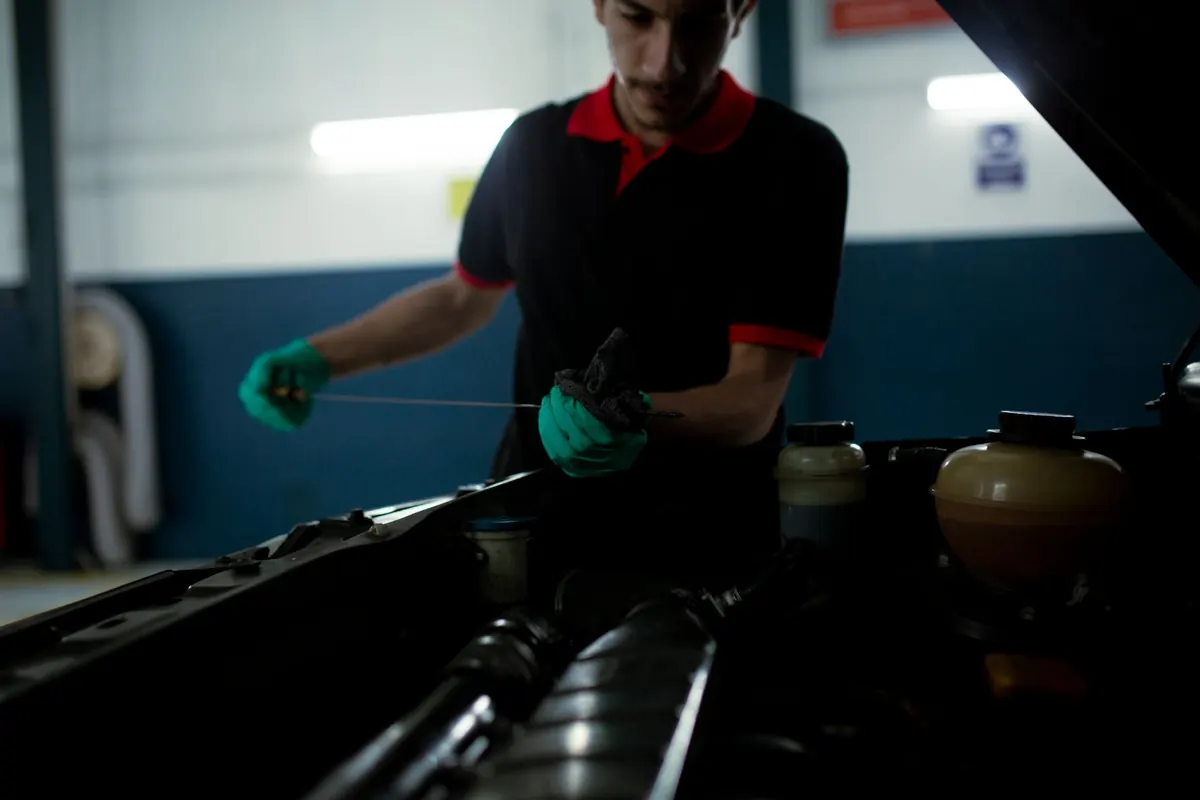
Pull the dipstick out and wipe it clean. This is the step people skip, and it's the one that matters most, because the first pull only tells you what's splashing around in the tube. Wipe it, push it all the way back in until it seats, then pull it out again and look.
Near the bottom you'll find two marks, or a pair of holes, or a crosshatched section. The lower mark is the minimum, the upper is the maximum. The oil should sit somewhere between them, ideally in the upper half.
A useful thing to know: the gap between those two marks usually represents around a litre of oil, though it varies between engines. So if you're sitting exactly on the minimum, you're roughly a litre down, not a thimbleful. That's why you add in small amounts and check as you go.
While the dipstick is in your hand, look at the oil, not just its height. Fresh oil is amber and translucent, like honey. Slightly dark oil is completely normal and simply means it's doing its job of holding onto dirt.
What should get your attention:
Dark oil alone isn't a reason to panic. Textured, odd-smelling oil is.
This is where a little restraint saves a lot of grief. Overfilling is easy to do and annoying to fix.
Stop when you're just under the maximum. Under is fine. Over is not.
Too much oil gets churned up by the crankshaft, which whips air into it. Aerated oil doesn't lubricate properly. The excess pressure can also push oil past seals and into places it shouldn't be, and you may see blue smoke from the exhaust or notice leaks appearing. If you do overfill, don't ignore it. A garage can drain the excess quickly, and it's a far cheaper job than fixing the consequences.
Once a month is a sensible rhythm, plus a quick look before any long journey. Modern engines use a little oil between services, and that's normal. What you're watching for is a change in pattern: if you find yourself topping up every couple of weeks, something is wrong and it needs investigating rather than topping up forever.
Keep a bottle of the correct oil in the boot if your car has a habit of using a bit. It costs less than a tank of fuel and can save a stranded afternoon.
Checking your oil is one of the few maintenance jobs with no real downside. It costs nothing, takes ten minutes, and gives you an early warning about problems that would otherwise stay hidden until they're expensive. Do it cold, on flat ground, read the stick twice, and add oil a little at a time.
If the oil warning light comes on while you're driving, stop safely as soon as you can and check the level. That light means low oil pressure, not just low oil, and continuing to drive can destroy an engine in minutes.
Beyond that, if anything you find looks wrong, milky oil, metal specks, or a level that keeps dropping, hand it to a qualified mechanic. They'll tell you what's actually going on, and you'll have saved yourself a great deal of guesswork.
Photo: Fatih Erden / Pexels

Your guide to cars and driving in the Shire.
Copyright © 2026 Shire Motoring. All rights reserved. Shire Motoring.